Grid Above the IDV Stack: The Platform Every IDV Vendor Can Plug Into
WRITTEN BY

The identity verification market has a newer talking point: orchestration.
Scroll through the product pages of the major IDV vendors right now and you will find the word has become common. You’ll see where top IDV providers have announced a partnership with orchestrators. Workflow builders. Multi-vendor routing.
The language has shifted because the market has shifted. Risk and compliance teams are no longer satisfied with a single point solution. They have learned, usually through painful experience, that one vendor is never enough.
So the vendors responded. They added workflow features. They built integrations with other providers. They started describing themselves as platforms.
This creates confusion. Not for the vendors. For the organizations evaluating them.
When every IDV vendor claims to be a platform, the framing obscures the most important question a risk officer can ask: who is this infrastructure actually built to serve?
The answer determines everything.
The Difference Between a Vendor with Features and an Operating System for Risk
There is a meaningful distinction between a vendor that has added orchestration capabilities after the fact and a platform that was built from the ground up to be vendor-agnostic infrastructure.
The distinction is not subtle. It shows up in contract structures, in how data flows, in the simplicity to create or modify existing workflows, in who controls the workflow logic, and in what happens when you need to add, swap, or remove a provider.
An IDV vendor that added orchestration features is still, at its core, an IDV vendor. Their proprietary verification engine is the primary product. The orchestration layer is built around it or possibly an add on through another vendor relationship. When you use their workflow builder, you are building workflows that route back to them. When they offer integrations with other providers, those integrations exist to extend the vendor's value proposition, not yours.
According to Mordor Intelligence's identity verification market analysis, market profit pools in the identity space are heavily concentrated at the orchestration layer, where vendors integrate multiple point solutions into a single unified API. The major IDV players understand this. Their move into "orchestration" language is not an accident. It is a response to where the market value sits.
That is exactly the dynamic organizations need to understand when they evaluate who is sitting at that layer in their stack.
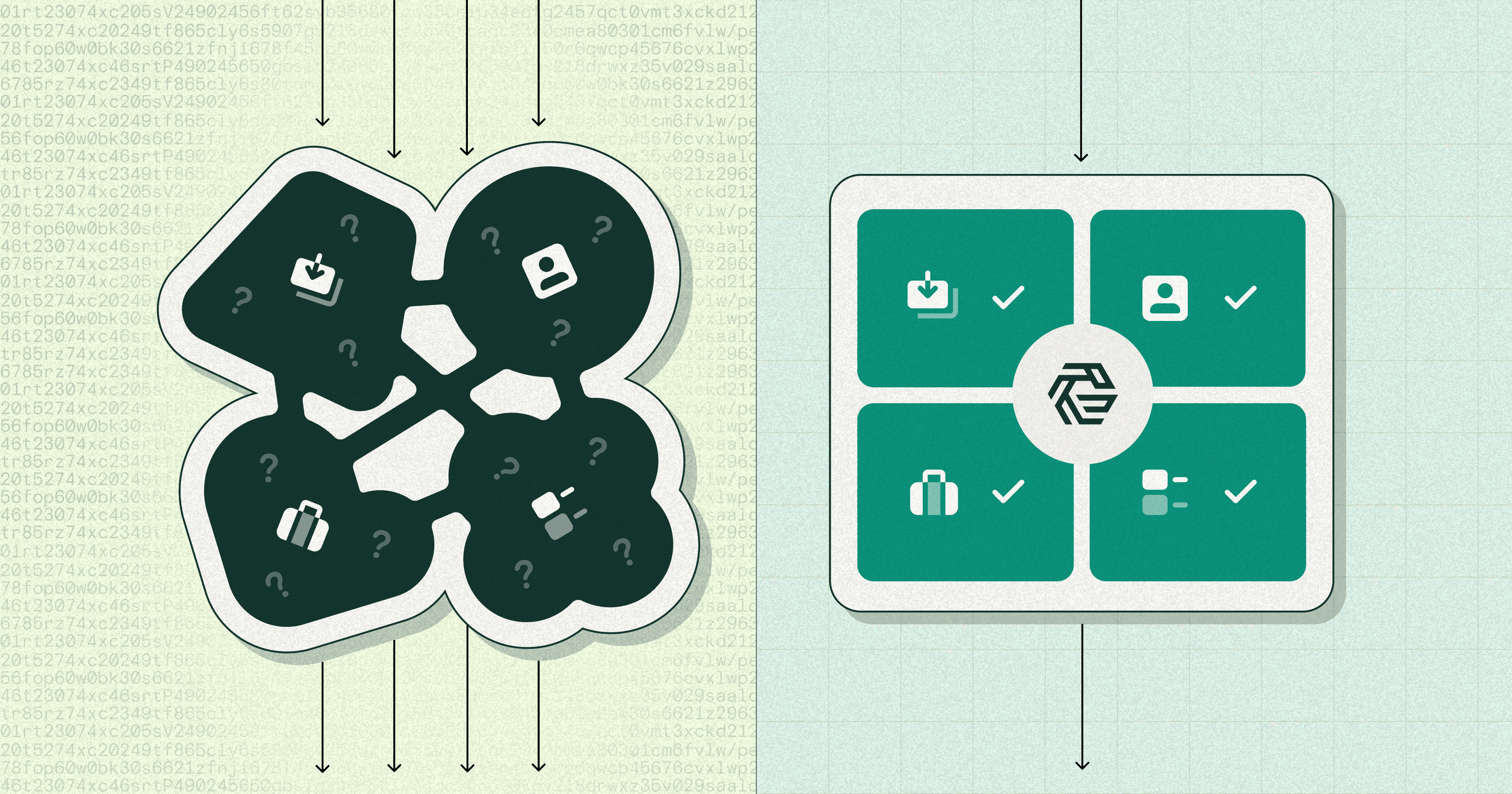
Grid is not an IDV vendor. Grid does not have a proprietary verification engine competing with Veriff, Resistant AI, or any other provider in the data network. Grid is the operating system for fraud, identity, and credit risk. The platform was built to sit above the vendor layer, coordinate every risk and verification decision a business makes, and give operators full control over that logic without requiring them to manage each provider separately.
One platform. One contract. Full control.
What Fragmentation Actually Costs
Most organizations with any maturity in their risk infrastructure already know they need more than one IDV vendor. The fraud threat landscape alone makes that clear. Deepfake attacks increased roughly 3,000% over the past 3 years, and nine out of ten off-the-shelf verification engines still misclassify sophisticated spoofing attempts. No single provider has solved this. Using only one means accepting blind spots.
The more honest challenge is what happens after you decide to use multiple vendors.
Integration complexity multiplies. Each new provider is a separate API, a separate contract, a separate compliance negotiation, a separate renewal cycle, and a separate team that has to be managed. When something breaks at 2 a.m., knowing which vendor to call can take time to track down. When a provider's accuracy drops in a specific document type or geography, updating your routing logic requires developer time. Worse, it could require you to source a new vendor with stronger results. When you need to add a credit check or a device fingerprinting signal to an existing workflow, you start the process over.
According to Future Market Insights, the digital identity services market has already undergone a structural shift in how revenue is distributed. API-first SaaS and orchestration platforms now account for 63.8% of market revenue, a direct reversal from the era when traditional point verification providers controlled nearly 70% of the space. In the USA specifically, the market is moving away from standalone verification toward multi-layered orchestration, with fraud analytics and workflow automation identified as the primary growth drivers. The demand for consolidated infrastructure is not emerging. It has arrived. The challenge is finding a platform that is actually built to deliver it.
The fragmentation cost that risk and compliance leaders rarely calculate fully is the decision quality cost. When your fraud signals, identity verification results, credit data, and AML screening outputs live in separate systems with separate dashboards, you are never looking at the full picture. You are synthesizing it manually, after the fact, with incomplete information. Blind spots do not just slow you down. They create false negatives that become fraud losses and false positives that turn away legitimate customers.
Grid's own customer data reflects this. A leading financial services organization running on Grid reduced repeat fraud attempts by 35% and cut manual reviews by 30%. A leading payments provider increased conversion rates by 25% and grew monthly recurring revenue by 15%. Those results come from having a unified view of every signal, with decisioning logic that runs automatically on rules the risk team configured without waiting on engineering.
Why Vendor-Agnostic Infrastructure Is Structurally Different
The word agnostic matters here. It is not marketing language. It describes a structural position that determines how the entire platform is designed.
A vendor-agnostic operating system for risk decisions does not benefit from routing your traffic to any particular provider. It does not earn more margin when you run checks through one vendor versus another. Its incentive is aligned with yours: get the best result from whatever combination of providers produces it.
This changes everything about how the platform is built.
Grid's workflow builder is built to serve your logic, not to funnel you toward a preferred provider. The conditional check logic, the if-then routing rules, the thresholds that trigger additional scrutiny, all of it is yours to configure. The platform connects you to the industry's top data providers, including Equifax, Experian, TransUnion, Veriff, Resistant AI, and more, through a single Grid contract. You access the full network without negotiating separately with each provider, without managing separate billing relationships, and without integrating each one individually. You only pay for the services and vendors you use.
When you need to swap a provider because a competitor is performing better in a specific document category, you update the workflow. You do not rebuild the integration. When you need to add a new signal, it is already in the network. On the off chance it’s not, Grid works quickly to evaluate and build a partnership with the best in class provider for that signal. When regulations require you to document your decision process, the audit trail exists in one place because the decisions were made in one place.
The IDC MarketScape for identity verification in financial services describes the growing requirement for dynamic, context-aware identity assurance across multiple use cases and jurisdictions. That kind of flexibility is not achievable when your verification logic is embedded in a single vendor's product. It requires infrastructure that can route, combine, and adapt signals from multiple sources without the underlying providers constraining how you do it.
The Build vs. Buy Question Has an Honest Answer
Many organizations with sophisticated risk functions have built internal infrastructure to manage multiple vendors. Some of it is well-constructed. Most of it was built to solve yesterday's problem and has become tomorrow's maintenance burden.
The argument against building in-house is not that it was the wrong decision when it was made. For organizations with strong engineering teams and specific requirements, building made sense. The argument is about what maintaining that infrastructure costs as the fraud landscape evolves, as new providers enter the market, as regulatory requirements change, and as the volume of decisions scales.
Every workflow change requires developer time. Every new provider integration requires scoping, building, testing, and maintaining. Every compliance update requires auditing a system that was not built with auditability as a first principle. The total cost of fragmentation, measured in engineering hours, manual review headcount, and fraud losses from blind spots, compounds over time.
The identity verification market sits at $15.78 billion today and is forecast to reach $26.8 billion by 2031, driven in part by the recognition that point solutions cannot scale alongside growing fraud complexity. The organizations that will manage this environment well are the ones that build their risk function on infrastructure designed for it, not on stitched-together vendor relationships held together by custom code and manual coordination.
Grid is built for exactly this purpose. Code-free workflow configuration means risk and compliance teams own their logic without depending on engineering for every change. The operating system framing is not an analogy. It is the design principle. Just as an operating system coordinates everything running on a computer without requiring the user to manage each process manually, Grid coordinates every risk and verification decision a business makes without requiring operators to manage each component separately.
What This Means for Risk and Compliance Leaders
If you are a risk or a compliance leader evaluating your current verification infrastructure, the questions worth asking are not just about which vendor has the best accuracy rate on a benchmark.
The questions that matter are structural.
Who controls your workflow logic today, and how quickly can you change it when the threat landscape shifts?
When a provider underperforms in a specific document category or geography, what does it take to adjust your routing?
Where do your fraud signals, identity data, credit information, and AML results live relative to each other, and can your team see them together at the moment of decision?
How many separate contracts and vendor relationships are being managed, and what does that cost in time and operational overhead that never shows up in a vendor's ROI calculator?
The digital identity services market is in the middle of a structural shift from point verification solutions toward multi-layered decisioning infrastructure. The vendors competing for the orchestration layer will frame this as a feature addition. The organizations that build on genuinely vendor-agnostic infrastructure will have control that vendor-dependent "orchestration" cannot provide.
Grid is the operating system for fraud, identity, and credit risk. One platform. One contract. Full control over every risk decision your business makes.
The IDV vendors are not competitors in Grid's stack. They are providers within it. That is the distinction. And for any organization that needs to make risk decisions at scale and cannot afford to get them wrong, it is the distinction that matters most.
Ready to see how Grid consolidates your risk infrastructure? Meet with sales to see the platform against your specific use case.